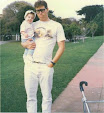
William Black, father of Joseph Smith Black, father of Phoebe Delora Reid, mother of Carolyn Timmins, mother of Billie Marlene Moyes, mother of Michael V. Moyes.
Biographical sketch of the life of William Black, son of William Black and Mary Gardiner, who was the daughter of James Gardiner, all of Antrim, Ireland.
For five generations the heads of the families were named William Black. William Black and Mary Gardiner Black's family consisted of four boys: William, George, Valentine and Joseph and the girls named Charlotte and Jane. Valentine, George and Joseph Black died young. Valentine enlisted in the British Army and was lost track of. William was born Aug 20th, 1784 at Lisborn, County Antrim, Ireland. At the age of 17 years he enlisted in the seventy second regiment of the British Army. He served four years in Ireland and seventeen abroad. He was at the taking of the Cape of Good Hope from the Dutch on January 6th, 1806 and at the taking of the Isle of France from the French in the year 1810. He went to Madras in the year 1814 and then to Bengal, East Indies. In the year 1821 he left for England and on the way home called at the Isle of St. Helena. "Bonaparte had just died before we got there. St. Helena is the largest rock I ever saw," he said. "It is a very strong place. The 20th regiment of foot was there and a good deal of the East Indies Company troops kept garrison at that time. I landed in Englandabout the 1st of March and was discharged; arrived at my father's house the 2nd day of July same year.
When I got home, my mother, brothers and sisters were all dead. None were left but my old father. On the 31st of July, 1832, I was married to Jane Johnston, daughter of Daniel Johnston and Margaret Chambers. I then joined the New Connection Methodists and lived with my father until the 4th day of February, 1834, when the old man died happy in the Lord. I left our native country and went to Manchester, England as my business at home failed.We then had three sons and one daughter. My trade was very poor but I had one shilling and five pence per day from the British government which enabled us to get along middling well. About the 1st of January, 1839 we joined the Church of Jesus Christ of Latter-day Saints and were baptized by Elder William Clayton. I was soon ordained a teacher and at the next conference ordained a priest and sent to Ireland with Brother John Taylor, one of the twelve apostles. Brother Taylor did not stop long with us for the people of that countrty did not receive the gospel. Brother Curtis was sent to me and we opened a branch in Hillsbarrow. Some four or five were baptized before I left. Brother Curtis stopped there. I came home on account of my family as I had to draw my pension in Manchester.
The next conference I was ordained an elder under the hands of Hiram Clark and John Smith, I believe. I was sent to Oldham and Toehdale and with the help of James Karigan built up two branches and the Lord blessed our labors. I had to stop there two years.My family went to America in 1840 and left me on my mission. The Lord blessed me in all my labors and in December, 1842 I took my journey to America to join the saints that had gone before. I landed in New Orleans on the 1st day of March in 1843. We did not get to Nauvoo on account of ice in the river until the month of April. We heard Joseph Smith preach on the 1st floor of the temple and that was the height of it then. I then started for Augusta where my family was and found them safe and well, praise the Lord. I had to go twice a year to draw my pension into upper Canada and on the 11th of May. 1845 was ordained a High Priest by orderof Brigham Young under the hands of Samuel Gaily and William Huntington. I moved to Nauvoo in the fall of 1844, lived there until the expulsion of the saints from Nauvoo, moved into Iowa till the spring of 1850, moved across the plains over 1600 miles by ox team to the valley of the Great Salt Lake and the same fall to San Pete Valley, in November, 140 miles south. In the spring I went by order of President Brigham Young and relocated to what is now known as Spring City, which had been abandoned on account of the indian depredations in the year A.D. 1853."
In the fall of 1861, he moved to Southern Utah on the Rio Virgin river, remained there until his death which occurred January 28th, 1873 at Rockville, Kane County. He was a man very unassuming in character, strictly honest, and much beloved by all his acquaintences and died firm in the faith in what is known as Mormon doctrine. These lines may be found in his tombstone in Toquerville Cemetary:
A noble veteran lieth here
His name and acts the saints revere
He's blest with honors of the best
With this armor bright he's gone to rest
Saturday, January 23, 2010

History of Thomas Mabey and Esther Chalker
Thomas Mabey and Esther Chalker parents of John James Mabey, father of Ila Vera Mabey, mother of Leon Roger Moyes, father of Michael Verl Moyes
THE LAND FROM WHICH THEY CAME (copied by Ila Vera Mabey Moyes from the volume by Charles R. Mabey)
It was here (England) in the late fifties of the last century that the good tidings were brought to the family of Thomas Mabey, a farmer of Mapperton and Wraxall, Dorset, England. It was from this place and from other communities in the same land that a second pilgrimage across the Atlantic to America had its beginning. Thomas Mabey was born in Mapperton Oct 15, 1812. He had married Esther Chalker, born at Loscombe, May 1, 1813. Six children resulted from this union: Maria, Jane, Albert, Joseph Thomas, Esther and my father, John James Mabey, born Nov 22, 1857 at Wraxall.The oldest daughter, Maria, to whom the word of the gospel seemed to make an immediate and fervent appeal, for from the very moment that the missionaries brought this message to her father's house, she espoused their cause and soon declared herself ready for baptism, which ordinance was administered to her on her twenty-first birthday, Dec 3, 1859. Other members of the family waited until the following summer, July 4, 1860.After a lapse of 40 years, Reverend Mr. Comton, still officiating though in his eighties, his hair snow white, his frame somewhat bent but his eyes still full of fire, when asked about the family (by Charles Mabey on a trip to England in 1900) the old gentleman said, "They were as fine a family as I ever had in my church. I never knew a better or more intelligent girl than Maria. It is a shame they joined those poor deluded Mormons and went away to America."He remembered the zeal with which these people attended to their duties and some of the earlier years of his life still angered against the so-called sect that had taken them from his pastoral care forever.THE SPIRIT OF GATHERINGThousands of their countrymen had already accepted discipleship under Joseph Smith and Brigham Young and emigrated to the Rocky Mountains. Henceforth, the united effort of the Mabeys were trained towards accomplishing the same end. Every penny they could save out of their meager earnings was set aside against the day when sufficient funds were on hand to defray the expenses of the long journey. This was no mean undertaking. They owned not a foot of land, their belongings were purely personal and of the most meager sort. The forthcoming money had literally to be dug out of the soil with spade, hoe and mattock at a time when the farm laborer of Britain received little more than was essential to keep his family in the bare necessities of life. There was only one, the father, who could command a man's wage, but the two older boys were now coming into manhood and were of material help while the two oldest daughters sought service with the neighboring gentry in the town of Bridgeport. Yet, with this united effort, it took the better part of two years to gather funds for the undertaking.It is not difficult to picture a scene of the evening on the day when each received his pay; the setting aside of so much for the family budget, the discussion as to what should be spent for food and clothing, the placing of what was left for safekeeping for the one important purpose, the hope that they might still skimp some more out of the amount dedicated to living costs, the prayers that none of them would get sick and thus rob the common purse of part of its hard earned treasure. THE PILGRIMAGEAt last the necessary money had been saved to make the ever memorable journey. By the necessary money I mean sufficient to carry the family to the Missouri River; beyond that, they would have to get help from the church which had established a fund for the dirrect purpose of aiding the poorer saints. The personal belongings of the family members were gathered, what little furniture they owned was disposed of, either by sale or as an outright gift to friends and relatives and they bade goodbye to the scene they had known since childhood. Uncles and aunts and cousins greeted them in a final farewell and amid kisses and tears they parted from their dear ones to meet no more in this life. At Bridgeport or Maiden Newport or some other convenient railroad station, they took the train for Liverpool and soon the prettiest spot on the green isle of Briton, with its hedge rows, its white sheep dotting the hillsides like daisies in a meadow, its familiar chalk white cliffs, its barrows and its burial mounds, passed out of their sight forever for not one of them ever saw the county of Dorset again.Their son-in-law, Albert Holt, had already preceded them to America and was to meet them on their arrival in the Salt Lake Valley. The railway journey led them to Bristol which stands by the channel of that name at the junction of the rivers Aron and Fromme. Since the days when the English began to vie with the Spanish for supremacy in the new world, this port had become important commercially and it now had second place among the cities of western England. It was therefore the first large town any member of the family had seen. To them it must have been an impressive place with its shipping, its hives of industry and bustling population. The remainder of their trip took them through Monmouth, Hereford, Shropshire and Cheshire. Liverpool at this time was the second port of Britain and one of the great ports of the world. Added to this was the thought that it would be the last part of their homeland they would see before setting out for a new and strange land.At the wharf on the day of sailing, 376 saints were gathered under the direction of Elder John D. T. McAllister. These had assembled from all sections of England and for the most part were composed of citizens of the middle and lower classes.
Like the Mabeys, they had joined the church, through hard work and careful savings had secured the means to transport themselves to Western America and were now on their way to their new home. They set sail on the American ship, Manchester, Tuesday May 6, 1862. The ship was cluttered up with the usual baggage of emigrating people, there were no lights and it was impossible to see the baggage done up in bundles. One man fell off the gang plank in the darkness and they had to fish him out using the cordage on some of the bundles for this purpose. When they went down into the hold, they had to take candles for there was no light. There were no portholes, the bunks were placed in tiers, the smell was awful. The food was worse; sea biscuits about 3 and 1/2 inches in diameter and a 1/4 of an inch thick. They couldn't be eaten until they were soaked in water they were so hard. The sailors were better fed than the steerage passengers. They had salt beef and other foods. The voyage over was uniformly good. The Captain had red whiskers. The ship arrived in New York on June 12, 1862 consuming 5 weeks and 2 days on the way across.
If the voyage of the Manchester to New York was uneventful, this was by no means the case on its return to Liverpool. It will be remembered that the American Civil War was then on. The "Alabama" was being built in a British shipyard while this particular company of saints were crossing the Atlantic. Late in June, the federal government made representations to the English power that this warship was being constructed for the purpose of preying upon American shipping against the rules of international laws. Nevertheless, the ship was completed and permitted to leave a British port in spite of such protest. The Manchester was of American registry but when she left Liverpool her passengers were almost of entirely British subjects. They were Mormons, it is true, but all nations had long since learned that the Island Power protects her citizens wherever and whoever they may be. No such scruples held them in check after the Manchester had discharged her human cargo and was on her return. She was met by this raider (the Alabama) and burned, a fate which fell upon some 28 other helpless American merchant ships the last three months of 1862.
AMERICA
Three thousand miles of ocean lay behind them. There yet remained almost an equal distance before they reached their destination. Nearly 4 months were to pass ere they reached their new home. Now the long ride by rail was begun and in due course they arrived at St. Joe, Missouri, from which point they boarded a steamboat bound upstream for Florence, Nebraska. Florence was then a typical outpost of civilization but, in 1862, from the Mormon standpoint, no place on the frontier held greater charm than Florence which had been settled by them in 1846 as a camp which they called Winter Quarters and which was associated with a thousand memories of love and persecution, of romance and drab existence, of life and death. The wagons that were to convey the company to which the Mabeys belonged arrived in Florence on July 16th. By the 24th of July, all was in readiness for the westward march. The company consisted of 500 souls and was under the captaincy of Ansel Harmon, who had his charges disposed so that they averaged 18 persons per wagon. This was known as the 4th Church Train.
Since July 24th was Pioneer Day, they decided to wait until the following day and celebrate in song and dancing, feasting and speechmaking before taking up the long trail. The emigrants were permitted to pass fully through Pawnee territory. These people from England had their first opportunity to observe an indian at first hand in the midst of his home surroundings and to do so without fear. 34 days out of Florence, the Harmon Train arrived at Chimney Rock, their journey nearly half over. The 4th Church Train arrived in the city of the Saints Oct 5, 1862 (Sunday evening). The Deseret News in the issue of Sep 24th had heralded the approach of this body of emigrants through Joseph Young who had returned from the East and given the names of the members of the train, among them being the Mabey family.
by Charles R. Mabey (as typed by Ila Vera Mabey Moyes in 1985)
Thomas Mabey died in 1863 in Bountiful, Utah. Esther Chalker Mabey lived many years after his death and died in Sep 1889. From their son Joseph sprang Charles Rendell Mabey who became 16th governor of the State of Utah. He desired to adopt my grandmother upon the death of both her parents in the Idaho wilderness but she remained in Idaho and was raised by her older sisters. I have visited the graves of the elder Mabeys in Bountiful and noticed some other interesting names alongside them. Governor Mabey's wife was Afton Rampton. The Ramptons were in the Governor's mansion all throughout the 1960's, Calvin Rampton being a well loved leader albeit a Democrat. Charles Mabey was Republican but he married into a dominant Democrat family. Charles was a poet and writer and travelled to San Diego and wrote a beautiful poem about La Jolla. Danieletta Wood married John James Mabey and they were called by Brigham Young to settle the Oakley, Idaho area where they became ranchers and potato and green bean farmers. It was always a joy to travel to Oakley and Burley and visit all of my grandmother's living sisters and Uncle Dan Mabey who lived on the same long country farm road. In later years (1979) the preaching of the gospel to the continent of Africa was opened by Elder Rendell N. Mabey as documented in his book Brother to Brother. My grandmother had an autographed copy of that amazing book in her home.
Mike Moyes
THE LAND FROM WHICH THEY CAME (copied by Ila Vera Mabey Moyes from the volume by Charles R. Mabey)
It was here (England) in the late fifties of the last century that the good tidings were brought to the family of Thomas Mabey, a farmer of Mapperton and Wraxall, Dorset, England. It was from this place and from other communities in the same land that a second pilgrimage across the Atlantic to America had its beginning. Thomas Mabey was born in Mapperton Oct 15, 1812. He had married Esther Chalker, born at Loscombe, May 1, 1813. Six children resulted from this union: Maria, Jane, Albert, Joseph Thomas, Esther and my father, John James Mabey, born Nov 22, 1857 at Wraxall.The oldest daughter, Maria, to whom the word of the gospel seemed to make an immediate and fervent appeal, for from the very moment that the missionaries brought this message to her father's house, she espoused their cause and soon declared herself ready for baptism, which ordinance was administered to her on her twenty-first birthday, Dec 3, 1859. Other members of the family waited until the following summer, July 4, 1860.After a lapse of 40 years, Reverend Mr. Comton, still officiating though in his eighties, his hair snow white, his frame somewhat bent but his eyes still full of fire, when asked about the family (by Charles Mabey on a trip to England in 1900) the old gentleman said, "They were as fine a family as I ever had in my church. I never knew a better or more intelligent girl than Maria. It is a shame they joined those poor deluded Mormons and went away to America."He remembered the zeal with which these people attended to their duties and some of the earlier years of his life still angered against the so-called sect that had taken them from his pastoral care forever.THE SPIRIT OF GATHERINGThousands of their countrymen had already accepted discipleship under Joseph Smith and Brigham Young and emigrated to the Rocky Mountains. Henceforth, the united effort of the Mabeys were trained towards accomplishing the same end. Every penny they could save out of their meager earnings was set aside against the day when sufficient funds were on hand to defray the expenses of the long journey. This was no mean undertaking. They owned not a foot of land, their belongings were purely personal and of the most meager sort. The forthcoming money had literally to be dug out of the soil with spade, hoe and mattock at a time when the farm laborer of Britain received little more than was essential to keep his family in the bare necessities of life. There was only one, the father, who could command a man's wage, but the two older boys were now coming into manhood and were of material help while the two oldest daughters sought service with the neighboring gentry in the town of Bridgeport. Yet, with this united effort, it took the better part of two years to gather funds for the undertaking.It is not difficult to picture a scene of the evening on the day when each received his pay; the setting aside of so much for the family budget, the discussion as to what should be spent for food and clothing, the placing of what was left for safekeeping for the one important purpose, the hope that they might still skimp some more out of the amount dedicated to living costs, the prayers that none of them would get sick and thus rob the common purse of part of its hard earned treasure. THE PILGRIMAGEAt last the necessary money had been saved to make the ever memorable journey. By the necessary money I mean sufficient to carry the family to the Missouri River; beyond that, they would have to get help from the church which had established a fund for the dirrect purpose of aiding the poorer saints. The personal belongings of the family members were gathered, what little furniture they owned was disposed of, either by sale or as an outright gift to friends and relatives and they bade goodbye to the scene they had known since childhood. Uncles and aunts and cousins greeted them in a final farewell and amid kisses and tears they parted from their dear ones to meet no more in this life. At Bridgeport or Maiden Newport or some other convenient railroad station, they took the train for Liverpool and soon the prettiest spot on the green isle of Briton, with its hedge rows, its white sheep dotting the hillsides like daisies in a meadow, its familiar chalk white cliffs, its barrows and its burial mounds, passed out of their sight forever for not one of them ever saw the county of Dorset again.Their son-in-law, Albert Holt, had already preceded them to America and was to meet them on their arrival in the Salt Lake Valley. The railway journey led them to Bristol which stands by the channel of that name at the junction of the rivers Aron and Fromme. Since the days when the English began to vie with the Spanish for supremacy in the new world, this port had become important commercially and it now had second place among the cities of western England. It was therefore the first large town any member of the family had seen. To them it must have been an impressive place with its shipping, its hives of industry and bustling population. The remainder of their trip took them through Monmouth, Hereford, Shropshire and Cheshire. Liverpool at this time was the second port of Britain and one of the great ports of the world. Added to this was the thought that it would be the last part of their homeland they would see before setting out for a new and strange land.At the wharf on the day of sailing, 376 saints were gathered under the direction of Elder John D. T. McAllister. These had assembled from all sections of England and for the most part were composed of citizens of the middle and lower classes.
Like the Mabeys, they had joined the church, through hard work and careful savings had secured the means to transport themselves to Western America and were now on their way to their new home. They set sail on the American ship, Manchester, Tuesday May 6, 1862. The ship was cluttered up with the usual baggage of emigrating people, there were no lights and it was impossible to see the baggage done up in bundles. One man fell off the gang plank in the darkness and they had to fish him out using the cordage on some of the bundles for this purpose. When they went down into the hold, they had to take candles for there was no light. There were no portholes, the bunks were placed in tiers, the smell was awful. The food was worse; sea biscuits about 3 and 1/2 inches in diameter and a 1/4 of an inch thick. They couldn't be eaten until they were soaked in water they were so hard. The sailors were better fed than the steerage passengers. They had salt beef and other foods. The voyage over was uniformly good. The Captain had red whiskers. The ship arrived in New York on June 12, 1862 consuming 5 weeks and 2 days on the way across.
If the voyage of the Manchester to New York was uneventful, this was by no means the case on its return to Liverpool. It will be remembered that the American Civil War was then on. The "Alabama" was being built in a British shipyard while this particular company of saints were crossing the Atlantic. Late in June, the federal government made representations to the English power that this warship was being constructed for the purpose of preying upon American shipping against the rules of international laws. Nevertheless, the ship was completed and permitted to leave a British port in spite of such protest. The Manchester was of American registry but when she left Liverpool her passengers were almost of entirely British subjects. They were Mormons, it is true, but all nations had long since learned that the Island Power protects her citizens wherever and whoever they may be. No such scruples held them in check after the Manchester had discharged her human cargo and was on her return. She was met by this raider (the Alabama) and burned, a fate which fell upon some 28 other helpless American merchant ships the last three months of 1862.
AMERICA
Three thousand miles of ocean lay behind them. There yet remained almost an equal distance before they reached their destination. Nearly 4 months were to pass ere they reached their new home. Now the long ride by rail was begun and in due course they arrived at St. Joe, Missouri, from which point they boarded a steamboat bound upstream for Florence, Nebraska. Florence was then a typical outpost of civilization but, in 1862, from the Mormon standpoint, no place on the frontier held greater charm than Florence which had been settled by them in 1846 as a camp which they called Winter Quarters and which was associated with a thousand memories of love and persecution, of romance and drab existence, of life and death. The wagons that were to convey the company to which the Mabeys belonged arrived in Florence on July 16th. By the 24th of July, all was in readiness for the westward march. The company consisted of 500 souls and was under the captaincy of Ansel Harmon, who had his charges disposed so that they averaged 18 persons per wagon. This was known as the 4th Church Train.
Since July 24th was Pioneer Day, they decided to wait until the following day and celebrate in song and dancing, feasting and speechmaking before taking up the long trail. The emigrants were permitted to pass fully through Pawnee territory. These people from England had their first opportunity to observe an indian at first hand in the midst of his home surroundings and to do so without fear. 34 days out of Florence, the Harmon Train arrived at Chimney Rock, their journey nearly half over. The 4th Church Train arrived in the city of the Saints Oct 5, 1862 (Sunday evening). The Deseret News in the issue of Sep 24th had heralded the approach of this body of emigrants through Joseph Young who had returned from the East and given the names of the members of the train, among them being the Mabey family.
by Charles R. Mabey (as typed by Ila Vera Mabey Moyes in 1985)
Thomas Mabey died in 1863 in Bountiful, Utah. Esther Chalker Mabey lived many years after his death and died in Sep 1889. From their son Joseph sprang Charles Rendell Mabey who became 16th governor of the State of Utah. He desired to adopt my grandmother upon the death of both her parents in the Idaho wilderness but she remained in Idaho and was raised by her older sisters. I have visited the graves of the elder Mabeys in Bountiful and noticed some other interesting names alongside them. Governor Mabey's wife was Afton Rampton. The Ramptons were in the Governor's mansion all throughout the 1960's, Calvin Rampton being a well loved leader albeit a Democrat. Charles Mabey was Republican but he married into a dominant Democrat family. Charles was a poet and writer and travelled to San Diego and wrote a beautiful poem about La Jolla. Danieletta Wood married John James Mabey and they were called by Brigham Young to settle the Oakley, Idaho area where they became ranchers and potato and green bean farmers. It was always a joy to travel to Oakley and Burley and visit all of my grandmother's living sisters and Uncle Dan Mabey who lived on the same long country farm road. In later years (1979) the preaching of the gospel to the continent of Africa was opened by Elder Rendell N. Mabey as documented in his book Brother to Brother. My grandmother had an autographed copy of that amazing book in her home.
Mike Moyes
Sunday, January 17, 2010

My Paternal Great Grandparents
William Gowans Moyes, my grandfather's father with his second wife, Martha Writsman.
1935 My grandfather's family. Elmer Allen Moyes sitting in his father's lap, 1901.

Elmer standing behind his father's left shoulder. 1910
 My grandfather's family. Elmer Allen Moyes sitting in his father's lap, 1901.
Elmer standing behind his father's left shoulder. 1910

Sarah Ann Allen, my grandfather's mother with uncle William and aunt Annie.

Saturday, January 16, 2010
Favorite Photos
Grandma, Adam, Henry, Danieletta and Gabby in Zion National Park 2000. What a crack-up! Savannah, Dad, Henry and Adam around 2001.

 What a crack-up! Savannah, Dad, Henry and Adam around 2001.
Our Toyota van, 1991 Salt Lake City. Henry, Gioia and Savannah.

1994 Hourglass Park, San Diego,CA

Henry and Adam teaching their new sister the ropes, 1987.

A visit back to San Diego, Spring 2007. First stop, Oceanside. Maggie, Caroline, Gabby, Matthew and Dad.

Everyone's happy except Dad. Summer of '94 El Cajon, CA.


Everyone's happy except Dad. Summer of '94 El Cajon, CA.

Thursday, January 14, 2010
Boyhood Pets
Sandy, our cat from 1967 until 1989,
soaking up the heat in Salt Lake City.

Rocky the wonder dog.
Our pet from 1975 to 1980.

My Wife's Family
 Enrique G. Garcia, Sheldon Garcia, Michele Ann Garcia
and Elizabeth Ann Bach Garcia
Chicago, IL 1967
Subscribe to:
Posts (Atom)